
Owning a car in Texas in 2026 can be more affordable than in some other states, but the total cost still adds up quickly if you don’t plan ahead. From insurance and fuel to maintenance, registration, and hidden fees, many drivers underestimate their true monthly expenses.
The cost of owning a car in Texas depends on several factors, including where you live, how much you drive, and the type of vehicle you own. Without a clear budget, these costs can create unnecessary financial pressure over time.
Managing your Texas driving costs is much simpler when you see a clear monthly breakdown of every expense. Real data helps you make smart choices about your vehicle type and your daily commute. Let’s dive into what you should expect to pay for a smooth journey across the state.
Key Takeaways
- Prepare for fuel and maintenance price shifts expected in 2026.
- Understand how updated registration fees impact your annual budget.
- Learn how to calculate monthly insurance premiums for different Texas regions.
- Discover how your location within the state affects your total spend.
- Find practical ways to lower your daily commuting and parking expenses.
- See a full breakdown of the hidden costs that most drivers overlook.
The Real Cost of Owning a Car in Texas
Understanding the true cost of car ownership in Texas goes beyond just the purchase price. It’s essential to consider various factors that contribute to the total cost of ownership, ensuring you’re not caught off guard by unexpected expenses.

Defining Total Cost of Ownership
The total cost of owning a car in Texas encompasses several key components, including the purchase price, financing costs, insurance premiums, fuel expenses, maintenance and repair costs, registration fees, and depreciation.
Purchase Price and Financing: The initial cost of the vehicle, whether it’s bought outright or financed through a loan or lease, significantly impacts the total cost of ownership.
Insurance Premiums: Texas law requires drivers to carry minimum liability insurance. Premiums can vary widely based on factors such as driving history, vehicle type, and location within Texas.
« The average annual cost of car insurance in Texas is around $1,343, which is 14% higher than the national average. »
Fuel Expenses: With Texas having some of the longest commutes in the country, fuel costs can add up quickly. The type of vehicle you drive, whether it’s gas-guzzling or fuel-efficient, plays a crucial role in determining these expenses.
Why Texas Presents Unique Financial Challenges
Texas presents unique financial challenges for car owners due to its large size, diverse geography, and specific state regulations. For instance, Texas has some of the highest auto insurance rates in the country, partly due to the high number of uninsured drivers on the road.
- High insurance rates due to the prevalence of uninsured drivers
- Long commutes and high fuel consumption
- State-specific regulations and fees
As Texas Monthly notes, « The state’s lack of comprehensive public transportation in many areas means that cars are not just a convenience, they’re a necessity. » This necessity comes with its own set of financial challenges that drivers must navigate.
By understanding these factors, Texas drivers can better prepare for the true cost of car ownership and make informed decisions to manage their expenses effectively.
You can also check our detailed guide on the cost of owning a car in Florida.
Vehicle Purchase Price and Financing Trends
Understanding the financial implications of purchasing a vehicle in Texas is crucial for making informed decisions. The total cost of ownership begins with the purchase price, which can vary significantly based on whether you’re buying new or used, and how you choose to finance your vehicle.
Average New and Used Car Prices in 2026
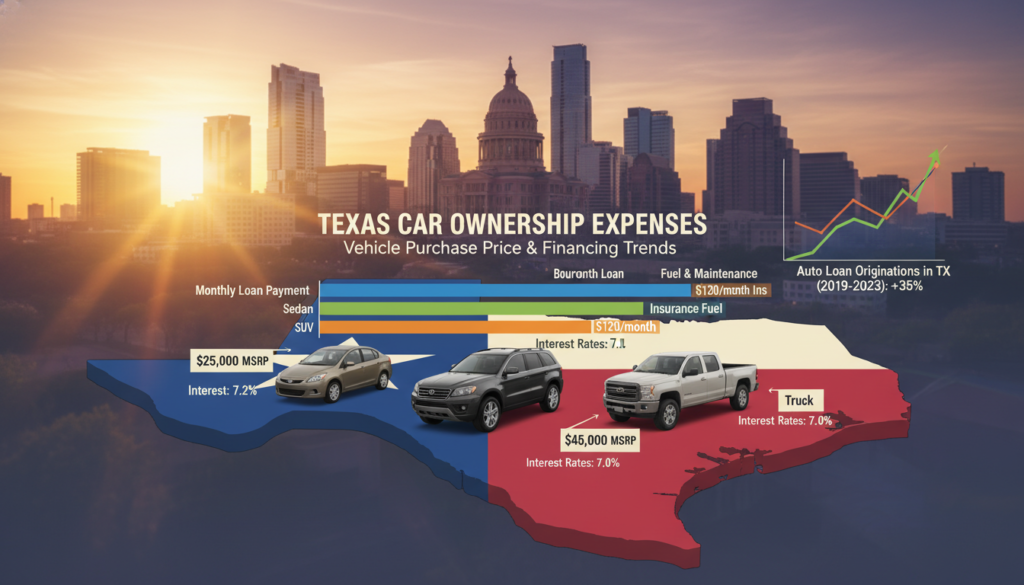
The average price for new vehicles in Texas is trending around $48,000, while used cars average about $28,000. These prices are influenced by factors such as vehicle type, brand, and model year.
For instance, electric vehicles (EVs) and trucks tend to be pricier, with some models exceeding $60,000. On the other hand, used cars offer a more affordable entry point, with prices varying based on age and condition.
Impact of Interest Rates on Monthly Payments
Interest rates significantly affect your monthly car payments. As of 2026, average auto loan interest rates range from 6% to 8% for new cars and 8% to 10% for used cars.
For example, a $30,000 car loan at 7% interest over 60 months would result in a monthly payment of about $594. A 1% increase in interest rate could add $20 to your monthly payment.
Leasing Versus Buying in the Current Market
Leasing offers lower monthly payments and the opportunity to drive a new car every few years. However, it comes with mileage limitations and no equity in the vehicle at the end of the lease.
Buying, on the other hand, allows you to build equity and modify your vehicle as desired, but it requires higher monthly payments and dealing with depreciation.
| Aspect | Leasing | Buying |
|---|---|---|
| Monthly Payments | Lower | Higher |
| Mileage Limitations | Yes | No |
| Equity | No | Yes |
| Customization | Limited | Full |
For more detailed information on the overall cost of owning a car, you can refer to our comprehensive guide on how much it really costs to own a.
Texas Auto Insurance Premiums and Coverage Requirements
The cost of car insurance in Texas can vary significantly based on several factors, making it essential to understand the requirements and influencing elements. Texas drivers need to comply with state laws regarding minimum insurance coverage while also being aware of the factors that can impact their insurance premiums.
Minimum Liability Requirements in Texas
Texas law mandates that drivers carry a minimum amount of liability insurance to cover potential damages in the event of an accident. The minimum liability requirements in Texas include:
- $30,000 for each injured person, up to a total of $60,000 per accident
- $25,000 for property damage per accident
These requirements are often represented as 30/60/25 coverage. Understanding these minimums is crucial, but drivers should also consider whether these amounts are sufficient to protect their assets in case of a serious accident.
Factors Influencing Your Insurance Quote
Several factors can influence your Texas auto insurance quote, including:
- Driving history: A clean driving record can significantly lower your premiums.
- Age and experience: Younger, less experienced drivers typically face higher rates.
- Vehicle type: The make, model, and year of your car can impact insurance costs.
- Location: Urban areas like Houston or Dallas may have higher premiums due to increased traffic and crime rates.
- Credit score: In Texas, insurance companies can use credit scores to determine premiums.
For more detailed information on how these factors affect your insurance costs, you can visit this resource.
Comparing Premiums Across Major Texas Cities
Insurance premiums can vary significantly across different cities in Texas. For instance:
| City | Average Annual Premium |
|---|---|
| Houston | $1,432 |
| Dallas | $1,384 |
| Austin | $1,245 |
These figures are averages and can be influenced by various factors, including local crime rates, traffic density, and state-specific insurance regulations. Understanding these variations can help drivers make informed decisions about their insurance choices.
By understanding the minimum liability requirements, factors that influence insurance quotes, and how premiums vary across major Texas cities, drivers can better navigate the complex landscape of Texas auto insurance. This knowledge empowers them to make informed decisions that can potentially save them money on their premiums while ensuring they remain compliant with state laws.
Fuel Costs and Texas Driving Habits
Understanding fuel costs is crucial for Texas drivers, given the state’s vast geography and diverse driving habits. The Lone Star State’s sprawling cities and extensive highways mean that fuel consumption can significantly impact the overall cost of owning a car.
Average Fuel Consumption for Texas Commuters
Texas commuters face some of the highest fuel consumption rates in the country. On average, a Texas commuter drives around 40 miles per day, with some areas like Houston and Dallas having even higher averages due to traffic congestion.
The average fuel economy for vehicles in Texas is around 24 miles per gallon (mpg), though this can vary widely depending on the type of vehicle. For instance, trucks and SUVs, which are popular in Texas, typically have lower fuel economy compared to sedans and hybrid vehicles.
| Vehicle Type | Average MPG | Annual Fuel Cost (avg.) |
|---|---|---|
| Sedans | 28 | $1,200 |
| SUVs/Trucks | 20 | $1,800 |
| Hybrids | 35 | $900 |
Gas Price Volatility and Regional Differences
Gas prices in Texas can be quite volatile, influenced by global oil prices, regional supply and demand, and state taxes. Regional differences also play a significant role, with urban areas often having different prices compared to rural areas.
For example, cities like Houston and Dallas tend to have slightly lower gas prices compared to more remote areas where transportation costs are higher.
The Economic Case for Electric and Hybrid Vehicles
Given the high fuel consumption rates and volatile gas prices, there’s a strong economic case for considering electric and hybrid vehicles in Texas. These vehicles offer significantly lower operating costs, with electricity generally being cheaper than gasoline.
For instance, charging an electric vehicle can cost as little as $3 to $5 per 100 miles, compared to $12 to $15 per 100 miles for gasoline-powered vehicles. Over time, these savings can add up, making electric and hybrid vehicles an attractive option for Texas drivers.
Key Considerations:
- Lower fuel costs
- Potential tax incentives
- Reduced maintenance costs
By understanding fuel costs and exploring alternatives like electric and hybrid vehicles, Texas drivers can make more informed decisions about their transportation choices, potentially saving money and reducing their environmental impact.
Maintenance and Repair Expenses in the Lone Star State
Understanding the maintenance and repair expenses associated with car ownership in Texas is crucial for budgeting effectively. Regular maintenance is key to preventing costly repairs down the line.
Routine Maintenance Schedules
Adhering to a routine maintenance schedule can help extend the life of your vehicle and prevent unexpected breakdowns. Typical maintenance tasks include:
- Oil changes every 5,000 to 7,500 miles
- Tire rotations every 6,000 to 8,000 miles
- Brake pad replacements every 30,000 to 50,000 miles
- Fluid checks and replacements as needed
Average Maintenance Costs in Texas
| Maintenance Task | Average Cost | Frequency |
|---|---|---|
| Oil Change | $30 – $75 | Every 5,000 – 7,500 miles |
| Tire Rotation | $20 – $50 | Every 6,000 – 8,000 miles |
| Brake Pad Replacement | $150 – $300 per axle | Every 30,000 – 50,000 miles |
Common Repair Costs for Popular Models
Certain car models are more prone to specific repairs. For instance:
- Toyota Camry: Timing belt replacement around 90,000 miles
- Ford F-150: Transmission repairs around 80,000 miles
- Honda Civic: Clutch replacement around 100,000 miles
Finding Reliable Mechanics in Urban vs Rural Areas
In urban areas like Houston or Dallas, finding a reliable mechanic is relatively easy due to the high competition among service providers. In contrast, rural areas may have fewer options, making it essential to research and identify trustworthy mechanics before needing their services.
To find a reliable mechanic, consider:
- Asking for referrals from friends or family
- Checking online reviews and ratings
- Looking for certifications like ASE (Automotive Service Excellence)
Registration, Title, and Inspection Fees
In addition to the initial purchase and ongoing expenses like fuel, Texas car owners must also contend with registration, title, and inspection fees. These costs, while not as obvious as loan payments or insurance premiums, are crucial components of the total cost of vehicle ownership in Texas.
Understanding Texas Vehicle Registration Fees
Texas vehicle registration fees are determined based on the type and weight of the vehicle. The fee structure is designed to account for the varying impacts different vehicles have on the state’s infrastructure.
Registration Fee Breakdown:
| Vehicle Type | Registration Fee |
|---|---|
| Passenger Vehicles | $50.75 – $58.75 |
| Trucks (under 6,000 lbs) | $54.00 – $62.00 |
| Motorcycles | $30.00 |
The Role of State Vehicle Inspections
Texas requires annual vehicle inspections to ensure that all vehicles on the road meet certain safety and emissions standards. The inspection process involves checking various components of the vehicle, including brakes, tires, and emissions systems.
Inspection Requirements:
- Safety inspections check critical vehicle systems.
- Emissions inspections ensure compliance with environmental regulations.
- Inspection fees typically range from $7 to $40.
Title Transfer and Sales Tax Considerations
When purchasing a vehicle, Texas buyers must also consider the costs associated with title transfer and sales tax. The title transfer process involves updating the vehicle’s ownership records with the Texas Department of Motor Vehicles.
Title Transfer and Sales Tax Costs:
- Title transfer fee: $28 – $33
- Sales tax: 6.25% of the vehicle’s purchase price (varies by county)
Understanding these costs is crucial for Texas car owners to accurately budget for the total cost of vehicle ownership.
Depreciation and Long-Term Value Retention
Depreciation is a significant factor in the total cost of owning a car in Texas, impacting your net worth more than you might realize. As you consider purchasing a vehicle, understanding how depreciation works and which factors influence it can help you make a more informed decision.
How Depreciation Affects Your Net Worth
Depreciation is the decrease in your vehicle’s value over time. It’s a critical aspect of car ownership because it directly affects your net worth. In Texas, the average new car depreciates by about 20% in the first year alone. This rapid initial depreciation is followed by a more gradual decline in value over the subsequent years.
Key factors influencing depreciation include:
- The vehicle’s make and model
- Mileage accumulation
- Condition and maintenance history
- Market demand and trends
To minimize the impact of depreciation on your net worth, it’s essential to choose a vehicle that retains its value well and to maintain it properly.
Vehicles That Hold Value Best in Texas
Some vehicles are known to hold their value better than others in the Texas market. Typically, these are models that are in high demand, have a reputation for reliability, and are known for their durability.
Top vehicles for resale value in Texas include:
- Toyota Tacoma
- Jeep Wrangler
- Subaru Outback
- Toyota 4Runner
- Ford F-150
These models are often sought after for their performance, reliability, and capability, making them more likely to retain their value over time.
The Impact of High Mileage on Resale Value
High mileage can significantly impact a vehicle’s resale value. In Texas, where long commutes and road trips are common, the mileage on a vehicle can add up quickly. Generally, vehicles with higher mileage are considered less desirable because they are perceived to have more wear and tear.
To mitigate the effects of high mileage:
- Regular maintenance is crucial
- Keep detailed service records
- Consider the model’s known reliability and durability
By understanding how depreciation affects your vehicle and taking steps to maintain its condition, you can help preserve its resale value.
Hidden Costs of Car Ownership
Beyond the obvious expenses, car ownership comes with several hidden costs that can significantly impact your budget. While many car owners focus on the purchase price, financing, insurance, and fuel, there are additional expenses that can catch them off guard.
Understanding these costs can help you better plan your budget and avoid financial surprises. For a comprehensive breakdown of car ownership costs, you can refer to our detailed guide on car ownership costs by vehicle type.
Parking Fees in Major Metropolitan Hubs
Parking fees in major Texas cities like Dallas, Houston, and Austin can add up quickly. Whether you’re parking at a meter, in a garage, or at a private lot, these costs can range from $1 to $5 per hour or more.
In downtown areas, daily parking fees can exceed $20. For example, in Houston’s central business district, parking rates can be as high as $30 per day. Monthly parking passes can also be expensive, often costing several hundred dollars.
Toll Road Expenses in Texas
Texas has an extensive network of toll roads, particularly in urban areas. Drivers using these roads can incur significant expenses, especially during peak travel times.
The cost of tolls varies depending on the road and the distance traveled. For instance, using the toll roads in Houston or Dallas can cost between $5 to $15 per trip. Frequent travelers on these roads can expect to pay $50 to $100 or more per month.
Cleaning and Detailing Costs
Keeping your vehicle clean and well-maintained is not just about aesthetics; it also helps preserve the vehicle’s condition and resale value. Regular washing, waxing, and interior cleaning are essential.
The cost of cleaning and detailing can vary widely depending on the service and frequency. A basic car wash might cost $10 to $20, while a full detailing service can range from $100 to $300 or more.
For those who prefer to maintain their vehicles themselves, initial investments in cleaning supplies and equipment can range from $50 to $200.
Regional Variations in Texas Driving Costs
The Lone Star State’s diverse geography and urbanization patterns significantly influence the cost of driving in different regions. Texas is a large and diverse state, with driving costs varying significantly from one region to another.
Cost of Living Differences: Dallas vs Houston vs Austin
The cost of living in major Texas cities like Dallas, Houston, and Austin differs, impacting driving costs. For instance, insurance premiums, fuel prices, and maintenance costs can vary between these urban centers.
| City | Average Annual Insurance Premium | Average Fuel Cost per Year | Average Maintenance Cost per Year |
|---|---|---|---|
| Dallas | $1,800 | $1,500 | $800 |
| Houston | $1,900 | $1,600 | $850 |
| Austin | $1,700 | $1,400 | $750 |
As shown in the table, Austin tends to have lower driving costs compared to Dallas and Houston, mainly due to lower insurance premiums and fuel costs.
Rural Driving Expenses and Infrastructure Impacts
Rural areas in Texas face unique driving challenges, including longer distances to work, school, or amenities, which can increase fuel consumption and wear on vehicles.
Rural Driving Considerations:
- Higher fuel costs due to longer travel distances
- Increased vehicle maintenance due to rougher road conditions
- Potential for higher repair costs due to limited access to affordable maintenance services
According to a study, rural drivers in Texas can expect to pay up to 20% more on fuel and maintenance compared to their urban counterparts.
« The rural-urban divide in Texas driving costs is significant, with rural areas facing higher expenses due to infrastructure challenges and longer driving distances. »
Understanding these regional variations is crucial for Texas drivers to manage their driving expenses effectively. By considering the specific challenges and costs associated with their area, drivers can make informed decisions to reduce their costs.
Strategies to Reduce Your Monthly Car Expenses
Reducing monthly car expenses requires a multi-faceted approach that includes refinancing, smart insurance choices, and savvy maintenance strategies. By implementing these strategies, car owners can significantly lower their financial burden.
Refinancing Your Auto Loan
One effective way to reduce monthly car expenses is by refinancing your auto loan. If interest rates have dropped since you took out your original loan, or if your credit score has improved, refinancing could save you money. Visit this resource to understand how refinancing can impact your monthly car ownership costs.
To refinance, start by checking your current loan details and credit score. Then, shop around for lenders offering better rates. Consider using online tools or consulting with a financial advisor to find the best deal.
Bundling Insurance Policies for Discounts
Bundling insurance policies is another strategy to reduce car expenses. Many insurance companies offer discounts when you combine multiple policies, such as home and auto insurance. This can simplify your payments and reduce overall costs.
When considering bundling, compare quotes from different insurers to ensure you’re getting the best deal. Look for insurers that offer significant discounts for bundling and have a good reputation for customer service.
DIY Maintenance Tips for Common Tasks
Engaging in DIY car maintenance can also help cut costs. Simple tasks like oil changes, tire rotations, and brake pad replacements can be done at home with the right tools and knowledge.
For those new to DIY maintenance, start with online tutorials or repair manuals specific to your vehicle’s make and model. Investing in basic tools and learning these skills can lead to significant savings over time.
By refinancing your auto loan, bundling insurance policies, and taking on DIY maintenance, you can effectively reduce your monthly car expenses. These strategies not only save money but also empower car owners to take control of their financial commitments.
Conclusion
Understanding the cost of owning a car in Texas is crucial for making informed decisions about your vehicle expenses. Throughout this article, we’ve broken down the various components that contribute to Texas car ownership expenses, from vehicle purchase price and financing trends to fuel costs and maintenance expenses.
By grasping these factors, you can better navigate the complexities of car ownership and identify opportunities for saving on car costs. Whether it’s refinancing your auto loan, bundling insurance policies, or adopting DIY maintenance tips, there are numerous strategies to reduce your monthly car expenses.
As you move forward, apply the insights gained from this article to optimize your car ownership experience. By doing so, you’ll be well-equipped to manage your expenses effectively and make the most of your vehicle investment in the Lone Star State.