
Planning a smart budget involves looking past the initial sticker price. To prepare well, you must understand the full cost of owning a car in the USA that families face today. But how much does it really cost to own a car in the USA in 2026?
Many people forget about important expenses like registration, insurance, and annual repairs. By reviewing the real cost of operating a vehicle, you can avoid unexpected financial stress. This guide simplifies complex numbers to help you track every dollar with confidence.
Understanding these costs empowers you to make better financial decisions for your household. Whether you buy a new or used car, knowing the full breakdown is essential for long-term success. Our goal is to give you a clear, practical roadmap to protect your budget from hidden surprises.
Many people forget about items like registration and annual repairs. By reviewing the actual expenses of operating a vehicle, you can avoid common stress. We aim to make these complex numbers simple and easy to track.
Demystifying these figures empowers you to make better choices for your household. Whether you buy new or used, knowing the math is essential for long-term success. This guide breaks down every detail to keep your wallet safe from surprises.
If you want a deeper breakdown by state, explore our detailed guides on the cost of owning a car in California, Texas, Florida, and New York.
Key Takeaways
- Depreciation remains the largest hidden expense for new vehicles.
- Credit scores heavily influence your total interest paid over time.
- Fuel and insurance rates vary significantly based on your location.
- Electric models often provide lower per-mile energy expenses.
- Regular maintenance prevents expensive mechanical failures later on.
- Registration and taxes are vital parts of your yearly budget.
The Current Landscape of Car Ownership Cost USA
The economic environment plays a significant role in shaping the costs associated with car ownership. Factors such as inflation, fuel prices, and interest rates can significantly affect the overall expense of owning and maintaining a vehicle.
Economic Factors Influencing Vehicle Expenses
Several economic factors contribute to the rising costs of car ownership in the USA.Inflationis a key driver, as it increases the cost of goods and services related to vehicle ownership, including maintenance, insurance, and fuel. For instance, as inflation rises, the cost of spare parts and labor for repairs also increases, contributing to higher maintenance expenses.
Another critical factor is the fluctuation infuel prices. Gasoline prices can vary significantly due to geopolitical events, supply chain disruptions, and seasonal demand changes. These fluctuations directly impact the cost of owning a gas-powered vehicle, making it essential for drivers to consider fuel efficiency when choosing a car.
Interest rates also play a crucial role in determining the cost of car ownership, particularly for those who finance their vehicle purchases. Higher interest rates can lead to increased monthly payments for car loans, thereby raising the overall cost of ownership. For more information on how financing options impact car ownership costs, you can visitcar insurance costresources.
Average Monthly Expenditure for American Drivers
Understanding the average monthly expenditure for American drivers can help prospective car owners prepare financially. According to recent data, the average monthly cost of owning a car in the USA can range from $500 to $1,000, depending on factors such as vehicle type, driving habits, and location.
To give you a better idea, here’s a breakdown of typical monthly expenses for car owners:
- Car loan or lease payments: $300-$500
- Insurance premiums: $100-$200
- Fuel: $100-$200
- Maintenance and repairs: $50-$100
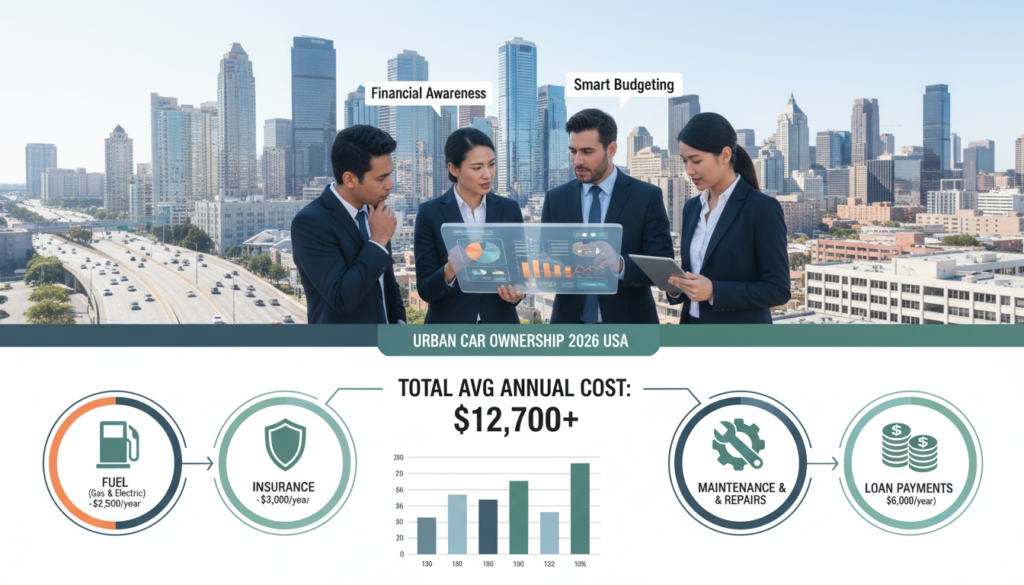
By understanding these costs and how they are influenced by broader economic factors, American drivers can make more informed decisions about their vehicle choices and financial planning.
Depreciation: The Silent Financial Drain
For many car owners, depreciation remains a silent financial drain, eating away at the vehicle’s value without immediate notice. Understanding how depreciation works is crucial for making informed decisions about car purchases and overall car ownership costs breakdown.
How Vehicle Value Declines Over Time
Depreciation is the decrease in a vehicle’s value over time, influenced by factors such as age, mileage, and condition. Typically, a new car loses a significant portion of its value within the first few years of ownership. For instance, a vehicle purchased for $30,000 might depreciate by 20-30% within the first year alone.
To put this into perspective, you can check out this detailed breakdown of 5-year car ownership costs, which includes depreciation.
Comparing Depreciation Rates by Vehicle Segment
Different types of vehicles depreciate at varying rates. Understanding these differences can help buyers make more informed choices.
Sedans vs. SUVs and Trucks
Sedans generally depreciate faster than SUVs and trucks, largely due to consumer preferences and the higher demand for the latter. SUVs and trucks tend to hold their value better, especially if they are popular models with strong resale demand.
Luxury Vehicles vs. Economy Models
Luxury vehicles often experience higher depreciation rates compared to economy models. This is because luxury cars typically have higher initial prices, and their value drops more significantly as they age. Economy models, being more affordable, tend to retain their value relatively better.

By understanding depreciation rates across different vehicle segments, car buyers can better anticipate the long-term costs associated with their purchase. This knowledge can guide them towards making more financially savvy decisions.
Financing and Interest Rate Impacts
The financial implications of car ownership extend beyond the purchase price, with financing and interest rates being key contributors. When buying a vehicle, many American drivers rely on financing options, which can significantly affect their overall USA vehicle ownership costs.
Understanding the intricacies of car financing is crucial for making informed decisions. The total cost of owning a car is not just the sticker price; it’s also influenced by the financing terms, including interest rates and loan duration.
Credit Scores and Loan Terms
A critical factor in determining the cost of financing a car is the buyer’s credit score. A good credit score can lead to more favorable loan terms, including lower interest rates. As noted by financial experts, « A higher credit score can save you thousands of dollars in interest over the life of the loan. »
« Credit scores are a crucial factor in determining the interest rate you’ll qualify for. A good credit score can make a significant difference in your monthly payments. »
For instance, a credit score of 750 or higher can qualify buyers for the best available interest rates, potentially saving them a substantial amount on their car loan. Conversely, a lower credit score may result in higher interest rates, increasing the total cost of the vehicle.
Loan Duration and Total Cost
The duration of the loan also plays a significant role in determining the total cost of financing a car. While longer loan terms may offer lower monthly payments, they often result in paying more in interest over the life of the loan. It’s essential for car buyers to weigh the benefits of lower monthly payments against the potential long-term costs.
| Loan Term | Monthly Payment | Total Interest Paid |
|---|---|---|
| 36 Months | $350 | $2,500 |
| 60 Months | $220 | $4,200 |
| 72 Months | $200 | $5,500 |
As shown in the table, extending the loan term from 36 months to 72 months reduces the monthly payment but increases the total interest paid by $3,000.
Refinancing Strategies to Reduce Monthly Payments
For those struggling with high monthly payments, refinancing can be a viable option. By refinancing their car loan, drivers can potentially lower their interest rate and reduce their monthly expenses. It’s crucial to review current loan terms and compare them with available refinancing options to determine the best course of action.
Refinancing can offer significant savings, especially for those who have seen improvements in their credit score since taking out the original loan. By securing a lower interest rate, car owners can decrease their car financing costs and improve their financial situation.
Insurance Premiums and Coverage Requirements
The cost of car insurance in the United States varies widely based on several factors, including location, driving history, and vehicle type. Understanding these factors and how they impact insurance premiums is crucial for drivers looking to manage their car ownership costs effectively.
Factors That Drive Up Insurance Costs
Several key factors contribute to the cost of car insurance. These include the driver’s age and experience, vehicle make and model, annual mileage, and history of claims or traffic violations.
- Young drivers, typically those under 25, face higher premiums due to their higher risk profile.
- Luxury and high-performance vehicles are more expensive to insure because of their higher value and the increased cost of repairs.
State-by-State Variations in Premiums
Insurance premiums vary significantly from state to state due to differences in state regulations, crime rates, and the frequency of natural disasters.
For instance, states with higher population densities, like New York and California, tend to have higher premiums due to the increased risk of accidents.
Strategies for Lowering Insurance Expenses
Drivers can employ several strategies to reduce their insurance costs.
Bundling Policies for Maximum Savings
Bundling multiple insurance policies with the same provider can lead to significant discounts.
For example, combining car and home insurance can result in lower overall premiums.
The Impact of Deductibles on Annual Costs
Choosing a higher deductible can lower monthly premiums, but drivers must ensure they can afford the deductible amount in case of a claim.
To manage car insurance costs USA effectively, understanding the factors influencing insurance premiums for cars is essential.
By understanding the factors that influence insurance premiums and employing strategies such as bundling policies and adjusting deductibles, drivers can significantly reduce their car insurance expenses.
Fuel Consumption and Energy Expenses
The financial impact of fuel consumption and energy expenses on car ownership cannot be overstated. As car owners navigate the complexities of vehicle expenses, understanding the nuances of fuel costs is crucial.
Gasoline Price Trends and Regional Differences
Gasoline prices vary significantly across different regions in the United States. Factors such as state taxes, transportation costs, and local demand contribute to these differences. For instance, states like California and New York tend to have higher gasoline prices due to higher state taxes and stricter environmental regulations.
Regional gasoline price differences can significantly impact the total cost of owning a gasoline-powered vehicle. It’s essential for car owners to consider these variations when calculating their fuel expenses.
The Total Cost of Ownership for Electric Vehicles
Electric vehicles (EVs) offer an alternative to traditional gasoline-powered cars, potentially reducing fuel costs. The total cost of ownership for electric includes the cost of electricity for charging, which is generally lower than gasoline costs.
Moreover, EVs often benefit from lower maintenance costs due to fewer moving parts. However, the initial purchase price of EVs can be higher than their gasoline-powered counterparts.
Charging Infrastructure and Home Energy Costs
The cost of charging an electric vehicle depends on the charging infrastructure and home energy costs. Installing a home charging station can be a significant upfront cost, but it provides the convenience of charging at home.
Additionally, the cost of electricity varies by region, affecting the overall cost of owning an EV. Car owners should consider these factors when deciding between a gasoline-powered vehicle and an electric vehicle.
By understanding the implications of fuel consumption and energy expenses, car owners can make informed decisions about their vehicle choices and potentially reduce their overall costs.
Maintenance, Repairs, and Tires
Beyond fuel and insurance, car owners must consider the financial impact of regular maintenance, unexpected repairs, and tire replacements. These costs can significantly affect the total cost of owning a vehicle.
Scheduled Maintenance Requirements for Modern Vehicles
Regular maintenance is crucial for extending the life of a vehicle and preventing costly repairs. Modern vehicles require scheduled maintenance that includes:
- Oil changes every 5,000 to 7,500 miles
- Tire rotations every 6,000 to 8,000 miles
- Brake pad replacements every 30,000 to 50,000 miles
- Fluid checks and replacements (e.g., coolant, transmission fluid)
Following the manufacturer’s maintenance schedule can help car owners avoid premature wear and tear on their vehicles.
The Cost of Unexpected Mechanical Repairs
Despite regular maintenance, unexpected mechanical issues can arise. The cost of repairs can vary widely depending on the type of vehicle and the nature of the problem.
Common unexpected repairs include:
- Engine repairs or replacements
- Transmission issues
- Suspension and steering system repairs
- Electrical system malfunctions
Having an emergency fund or a warranty can help mitigate the financial impact of these unexpected expenses.
Tire Replacement Cycles and Quality Considerations
Tire replacement is a significant maintenance cost. The frequency of replacement depends on factors such as driving habits, road conditions, and tire quality.
Key considerations for tire replacement include:
- Tread depth and wear indicators
- Tire age and durability
- Quality and brand reputation
Investing in high-quality tires can improve safety and potentially reduce long-term costs.
Taxes, Registration, and Licensing Fees
In addition to the direct costs of owning and operating a vehicle, American car owners face a complex landscape of taxes and registration requirements. These costs can vary significantly from state to state, making it essential for car owners to understand the specific regulations and expenses associated with their vehicle.
State-Specific Registration Fees
Registration fees are a necessary expense for all vehicle owners, but the cost can differ substantially depending on the state of residence. For example, some states base their registration fees on the vehicle’s value, while others charge a flat rate. To give you a better understanding, here’s a breakdown of average registration fees in different states:
| State | Average Registration Fee |
|---|---|
| California | $46-$73 |
| Texas | $50.75-$58.75 |
| Florida | $48.65-$225 |
| New York | $30-$140 |
As you can see, car registration fees can vary widely. It’s crucial to check with your state’s Department of Motor Vehicles (DMV) for the most accurate and up-to-date information on registration costs. For more details on the overall cost of car ownership, you can visit our comprehensive guide on how much it really costs to own a car per.
Property Taxes on Vehicles
Many states also impose property taxes on vehicles, which can add to the overall cost of ownership. These taxes are typically based on the vehicle’s value and can fluctuate over time. For instance, in some states, the property tax is calculated as a percentage of the vehicle’s depreciated value.
Emissions Testing and Inspection Costs
Some states require emissions testing and vehicle inspections to ensure that cars on the road meet certain environmental and safety standards. These tests can incur additional costs, which vary by state and locality. For example, in California, the smog check program requires vehicles to undergo emissions testing every two years, with costs ranging from $30 to $200, depending on the type of vehicle and the test outcome.
Understanding these costs is crucial for budgeting the total cost of car ownership. By being aware of the taxes, registration fees, and inspection costs associated with your vehicle, you can make more informed decisions about your car ownership experience.
Hidden Costs of Vehicle Ownership
Beyond the obvious expenses of car ownership, there are several ‘hidden’ costs that can significantly impact your budget. These expenses, while not immediately apparent, can add up quickly and catch car owners off guard.
Understanding these costs is crucial for effective budgeting and making informed decisions about vehicle ownership. For a comprehensive breakdown of various car ownership costs, you can refer to our detailed guide on car ownership costs by vehicle type.
Parking Fees in Urban Environments
Parking fees in urban areas can be a significant expense, especially for those who live in cities with high parking demand. Monthly parking permits can range from $50 to over $300, depending on the location and availability.
For instance, parking in major cities like New York or San Francisco can be particularly costly. Some strategies to mitigate these costs include:
- Opting for street parking when available, though this may come with time limits and the risk of parking tickets.
- Seeking out free parking options, such as certain residential areas or shopping centers that offer free parking for a limited time.
- Negotiating with employers to offer parking benefits or reimbursing parking expenses.
Tolls and Commuter Expenses
Tolls and other commuter expenses are another often-overlooked aspect of car ownership. For those who commute long distances or frequently travel on toll roads, these costs can be substantial.
Some tips for managing tolls and commuter expenses include:
- Exploring alternative routes that avoid toll roads.
- Investing in a toll pass or transponder, which can sometimes offer discounted rates for frequent travelers.
- Carpooling or using public transportation to reduce the number of vehicles on the road and lower individual toll expenses.
Cleaning, Detailing, and Aesthetic Upkeep
Maintaining a vehicle’s appearance can also come with costs. Regular washing, waxing, and interior cleaning are essential for preserving the vehicle’s condition and resale value.
While some car owners prefer to handle these tasks themselves, others may opt for professional detailing services. The frequency and cost of these services can vary widely depending on the vehicle’s size, condition, and the owner’s preferences.
To keep these costs in check, consider the following:
- Learning basic car maintenance and cleaning techniques to reduce reliance on professional services.
- Investing in quality cleaning products and equipment for personal use.
- Comparing prices among local detailing services to find the best value.
By being aware of these hidden costs and taking steps to manage them, car owners can better budget for the total cost of vehicle ownership and make more informed decisions about their transportation expenses.
Conclusion
Owning a car in the USA involves a complex array of costs that extend far beyond the initial purchase price. Understanding the total cost of car ownership USA is crucial for making informed decisions about transportation choices.
A comprehensive car ownership expenses summary reveals that expenses such as depreciation, financing, insurance, fuel, maintenance, taxes, and hidden costs all play a significant role in the overall cost.
By grasping these various components, individuals can optimize their car ownership experience and potentially save money. This knowledge empowers drivers to make practical decisions, from choosing the right vehicle to navigating financing options and minimizing ongoing expenses.
Ultimately, being aware of the full scope of car ownership costs enables Americans to better manage their budgets and make more informed choices about their transportation needs.